
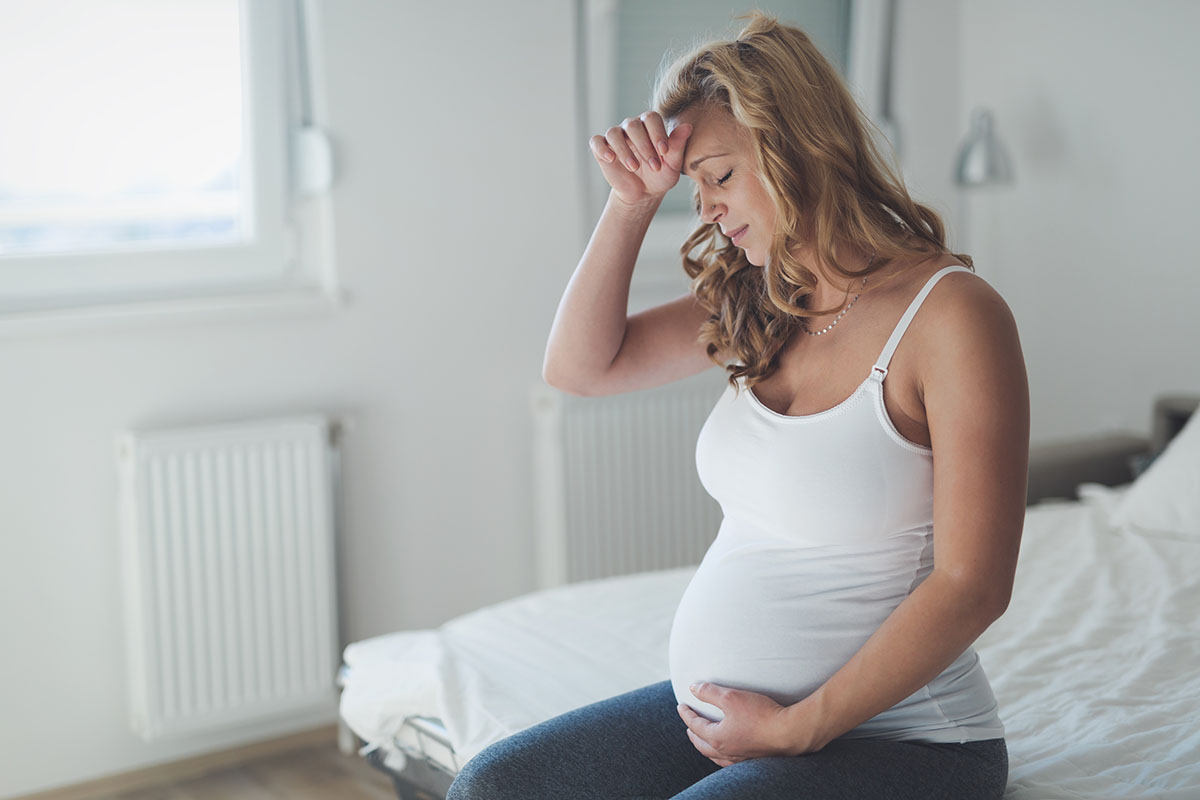
A headache can be described as any pain or discomfort in any region of the head or face. Headache pain might be felt on one or both sides of the head, be isolated to a small area or feel like it is spreading from one point to another. The general features of a headache usually include one or more of the following:
- A pain that is sharp.
- A throbbing sensation (sometimes described as a vise-like quality) around the head.
- A dull ache.
Although most headaches experienced during pregnancy do not warrant medical attention, for those with conditions such as high blood pressure or pre-eclampsia, headaches will carry more significance since they can point to a larger issue.
Headaches in pregnancy may be associated with one of the following:
Early pregnancy
It is not uncommon for women to experience headaches in the early stages of their pregnancy. Most women tend to see an increase in headaches and migraines during their first trimester. This may be due to a combination of fluctuating hormones or an increase in your circulating blood volume.
High blood pressure and pre-eclampsia
High blood pressure can be symptomless. Many individuals only discover they have high blood pressure when it is checked on a regular basis by a medical professional. This is why attending all prenatal appointments is particularly important. During these check-ups, your doctor or midwife will measure your blood pressure and track it over the course of your pregnancy.
The presence of a headache in pregnancy can also be a symptom of pre-eclampsia. Pre-eclampsia is a type of high blood pressure that develops after 20 weeks of pregnancy. It is also associated with signs of damage to other organ systems, such as the kidneys, liver, blood or brain. Pre-eclampsia can be extremely dangerous to both mom and baby. Alongside a severe headache, symptoms associated with pre-eclampsia are:
- Changes in vision, including temporary loss of vision, blurred vision or light sensitivity.
- Upper abdominal pain
- Nausea or vomiting
If you are experiencing any of these symptoms, make an appointment to see your doctor immediately.
Sleep and stress
A lack of sleep and increasing stress levels can also play a role in developing headaches. Pregnancy understandably comes with its own stressors. Body changes, loss of sleep and general life issues can all crop up and increase your stress levels. Where possible, take steps to address any factors that are a source of stress.
Other factors
Other conditions that may cause headaches in pregnancy include:
- Eating certain foods that might trigger migraines.
- Not drinking enough water
- Not getting good nutrition
When to see your doctor
Most headaches do not require intervention by a health professional. However, if you experience one more of the following signs and symptoms, make an appointment to speak to your doctor urgently.
- Headaches that are non-stop or getting progressively worse.
- Headaches that are associated with blurry vision, including temporary loss of vision or light sensitivity.
- Headaches associated with upper abdominal pain.
- Headaches associated with nausea or vomiting.